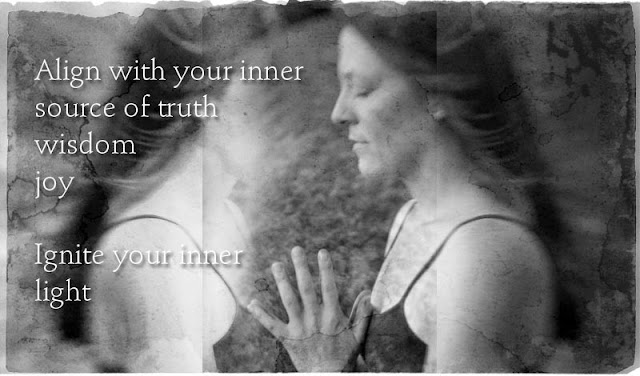
Greetings Folks!
I will be continuing to blog via my own website, www.amypatee.com, come and see me there!
In light and love,
Amy Patee
www.amypatee.com
Showing posts with label Yoga. Show all posts
Showing posts with label Yoga. Show all posts
Saturday, July 24, 2010

Wednesday, January 27, 2010
Getting Comfortable with the Uncomfortable
Spending time on your yoga mat may be an ideal way to stretch your tight muscles, strengthen your body, and relax your mind. But there is so much more to gain from your practice, especially if you begin to consciously bring what you do on your mat to the rest of your life.
I want to invite you to explore a practice that I’ve been working with over the last several weeks. I call it “getting comfortable with the uncomfortable”.
Most experiences we have (both on our yoga mat and off) are pleasurable or not. What feels good to us we accept and often times, seek out and attempt to hold on to for as long as possible. When something doesn’t feel good to us we push it away, ignore or attempt to avoid it, or try to eliminate it as soon as possible. Sometimes this act of resisting takes the form of judgment.
For example, in yoga class your teacher may guide you into a posture that you find extremely challenging. As you approach the pose you are filled with anger at the teacher for “pushing everyone too hard” or for making yoga into “a game of who’s strongest”. The truth is however, the teacher is simply instructing the class through a variety of postures. You most likely find the pose difficult and possibly feel less-than your fellow yogis for not being able to perform it as well as them. The story that you are telling yourself (in the form of judgment) is how you avoid taking responsibility for your own “bad” feelings.
Not everyone resorts to judgment all of the time. We can deal with non-pleasure inducing postures by taking a water break or going to the bathroom. Another commonly employed distraction is picking the lint off your yoga mat or staying in the pose, but completely collapsing and checking out.
Funny thing is, as soon as the “bad” pose ends and a pose we have deemed “good” is executed we’re happy again, life is great, and our teacher is once again our favorite.
The same thing occurs in life. Things are going our way and we feel great! Something “bad” happens and we feel awful. Some people may have very little awareness of the “bad” times because at the first hint of pain they run so fast they don’t even realize what propelled them to do so. While they may avoid being uncomfortable in the moment, they may also miss out on a lot of meaningful life experiences. Others linger in the “bad” feelings for way to long because they think that’s their only option. In this case, the person may appear to be very skilled at “getting comfortable with the uncomfortable”, but that’s not really what’s occurring. When one truly gets comfortable with the uncomfortable a state of contentment, or santosha, arises. Usually, in this moment, “bad” feelings dissipate and faith in the divine plan dominates. The situation may still be the same, but your state of being in relationship to it has changed.
Next time you step onto your mat experiment with “Getting Comfortable with the Uncomfortable” using these suggestions. Apply them in your day-to-day life as well and notice how Santosha/contentment increases.
- First of all, make a commitment to realize your emotional self.
Everyone is meant to experience a range of emotions which you can essentially plug into two categories: “good” and “bad”. All emotions are valuable resources that we’ve been given. They inform us about what we like, dislike, and basically, what we believe.
You may feel like you are ruled by your emotions. Or, maybe you feel disconnected to your feelings and more “up in your head”. Regardless of your tendencies, being able to realize this aspect of yourself that is emotional can be liberating. Stepping back to recognize how you are feeling can help you release any identification you may have with your emotional state affording you greater objectivity about the moment. Additionally, if you don’t feel easily, choosing to realize this part of yourself is all it takes to wake up your emotional body.
Make it a daily practice to check-in with yourself about how you are feeling
- in the morning when you awake
- mid-day
- at night when you retire
- anytime you feel triggered in a negative way
Take a few breaths and receive the information your emotional body is offering you.
On your yoga mat, engage in a similar practice. Acknowledge your emotional state of being at the beginning of practice, somewhere in the middle, and at the end of your practice. If a pose has brought buried emotions to the surface or something the teacher says triggers you, check in then as well.
- Acceptance.
When you are experiencing an emotion, embrace it. I have found it especially useful to say to myself, “I’m really angry right now, and that’s ok”. Depending on the intensity of my emotion I may need to add, "no one's going to die", or something along those lines.
No emotion is inherently good or bad. In essence they are simply energies moving through us informing us about our perceived reality.
- Get Comfortable with the Uncomfortable
This step occurs simultaneously with step #2. After you have acknowledged what you are feeling (step 1) and have admitted to yourself that that is ok, any “bad” feelings lose their power. Suddenly you have become comfortable with what was making you uncomfortable. You have discovered Santosha or Contentment. And with this comes a sense of great freedom.
When I feel contentment I know deep in my being that everything is going to be ok. I realize that I’m not going to die, life will continue to go on, and I also remember that it will only be a matter of time before change occurs and this “moment” will then be a past memory stored away in my mind.
Have fun exploring! Let me know if you have any questions and please share any comments!
In light,
Amy Patee
www.amypatee.com
Wednesday, September 2, 2009
Teaching Yoga: The Foundational Elements
Over the next couple of months my blogging will be focused on the topic of “Teaching Yoga” and is especially geared towards Yoga Teachers. However, any person interested in self-growth and/or a regular student of yoga should not hesitate to read further. Looking through the lens of a teacher (of any subject) can be illuminating and enlightening. Enjoy!
All of the topics to follow are excerpts and/or summaries from my forthcoming book: Teaching Yoga—A Definitive Guide.
The Foundational Elements of Yoga
What I have observed in teaching over the years is that there are so many angles to teaching yoga. There are so many styles, belief systems, philosophies, lineages, and “best” ways to align the shoulders, and breathe deep, and, and, well, you get the idea.
I see teachers who strongly adhere to the “one way” perspective and those that float from idea to idea absorbing as much information as possible. Neither is good nor bad. It is useful to go fully into one style or system of yoga to embody that path. It is the attachment to that “being the only way” that can create an obstruction to moving forward. Likewise, dabbling in many different styles and/or yogic ideas can also be beneficial affording you many choices and possibilities for teaching and practicing. However, sometimes the constant “seeker” is simply distracting him/herself from just being and learning from the teacher within.
I am always curious about what lies at the base of any organized and/or structured system or philosophy. I wonder, what are the key ingredients needed to educe the final product. I am most interested in the ‘product’ of healing. My definition of healing is, “the way we return to our essential state of wholeness”. This innate interest within myself is why I was drawn to Yoga and to all of the other body-mind modalities that I have studied.
Yoga to me is the end product obtained by doing all of the practices that we refer to as Yoga. Yoga is not asana, pranayama, meditation, chanting, etc. Yoga is the embodiment of our Essential Self. It is a state of being.
So, I have asked within my own practice and in teaching; what are the key elements that elicit Yoga? Yes, there are so many books filled with endless techniques to get me there. There are many teachers that “know” the way. And yet, what is beneath those practices, those teachings?
The Body seems to be one of these key ingredients, for it is here in the present moment. It may carry energy from long ago, but the physical manifestation of body is right here, right now and the vehicle in which we experience our Essential Self.
Ingredient #1: Body
The body cannot exist without the breath (at least not for very long) so it to must be a primary ingredient for this experience of Yoga to be had. Like the body, it is only here in the moment. Also, like the body, the breath may reveal the past and/or the projection onto the future, but it only expresses in the Now.
Ingredient #2: Breath
What else I have wondered can be in this moment as it is my belief that Enlightenment or Yoga can only be experienced in the present.
Mind. Another word that could be used here is Consciousness. There are many layers of the mind that can add or subtract us away from the moment. It definitely is primary to existence. Whether we are awake or asleep, consciousness is with us and impacts are state of being.
Ingredient #3: Consciousness or Mind
These first three ingredients: Body, Breath, and Mind do not = Yoga. Just like eggs, flour and sugar do not = cake. This is where you must actively choose to engage with yourself—to become aware.
Through yogic practices you start to develop body awareness, breath awareness and awareness of your mind. When you cultivate enough of each and mix them all together into alignment you achieve presence.
Being present precedes being enlightened, but it does not = Yoga.
A prolonged period of presence however does promote self-knowing. When you are in the present moment it is easier to be objective and to have clarity about the truth. When you are present your body, breath, and mind are aligned. As you become familiar with this state of being, you will realize more easily when you are not in the moment. You can begin to observe what it is that takes you away from the moment. All of this is information that can be useful on your path to enlightenment.
Being present gives you more choices about how you expend your energy, what you give your attention/energy to, and a place of orientation to navigate the world objectively.
You might choose to utilize your presence to go deeper into the experience of Yoga. Meditation can take you there. When this takes place your body, breath, and mind become expanded. Limitations are removed and there is a great sense of being at One with All That Is. The little body merges with the Big Body. The little breath unites with the Big Breath. And, the little mind becomes the Big Mind.
Then what?
My next post will dive deeper into these foundational elements of Yoga and how we address them in Teaching.
Stay tuned and please leave comments, thoughts, ideas that you have to share!
Thanks for reading.
All of the topics to follow are excerpts and/or summaries from my forthcoming book: Teaching Yoga—A Definitive Guide.
The Foundational Elements of Yoga
What I have observed in teaching over the years is that there are so many angles to teaching yoga. There are so many styles, belief systems, philosophies, lineages, and “best” ways to align the shoulders, and breathe deep, and, and, well, you get the idea.
I see teachers who strongly adhere to the “one way” perspective and those that float from idea to idea absorbing as much information as possible. Neither is good nor bad. It is useful to go fully into one style or system of yoga to embody that path. It is the attachment to that “being the only way” that can create an obstruction to moving forward. Likewise, dabbling in many different styles and/or yogic ideas can also be beneficial affording you many choices and possibilities for teaching and practicing. However, sometimes the constant “seeker” is simply distracting him/herself from just being and learning from the teacher within.
I am always curious about what lies at the base of any organized and/or structured system or philosophy. I wonder, what are the key ingredients needed to educe the final product. I am most interested in the ‘product’ of healing. My definition of healing is, “the way we return to our essential state of wholeness”. This innate interest within myself is why I was drawn to Yoga and to all of the other body-mind modalities that I have studied.
Yoga to me is the end product obtained by doing all of the practices that we refer to as Yoga. Yoga is not asana, pranayama, meditation, chanting, etc. Yoga is the embodiment of our Essential Self. It is a state of being.
So, I have asked within my own practice and in teaching; what are the key elements that elicit Yoga? Yes, there are so many books filled with endless techniques to get me there. There are many teachers that “know” the way. And yet, what is beneath those practices, those teachings?
The Body seems to be one of these key ingredients, for it is here in the present moment. It may carry energy from long ago, but the physical manifestation of body is right here, right now and the vehicle in which we experience our Essential Self.
Ingredient #1: Body
The body cannot exist without the breath (at least not for very long) so it to must be a primary ingredient for this experience of Yoga to be had. Like the body, it is only here in the moment. Also, like the body, the breath may reveal the past and/or the projection onto the future, but it only expresses in the Now.
Ingredient #2: Breath
What else I have wondered can be in this moment as it is my belief that Enlightenment or Yoga can only be experienced in the present.
Mind. Another word that could be used here is Consciousness. There are many layers of the mind that can add or subtract us away from the moment. It definitely is primary to existence. Whether we are awake or asleep, consciousness is with us and impacts are state of being.
Ingredient #3: Consciousness or Mind
These first three ingredients: Body, Breath, and Mind do not = Yoga. Just like eggs, flour and sugar do not = cake. This is where you must actively choose to engage with yourself—to become aware.
Through yogic practices you start to develop body awareness, breath awareness and awareness of your mind. When you cultivate enough of each and mix them all together into alignment you achieve presence.
Being present precedes being enlightened, but it does not = Yoga.
A prolonged period of presence however does promote self-knowing. When you are in the present moment it is easier to be objective and to have clarity about the truth. When you are present your body, breath, and mind are aligned. As you become familiar with this state of being, you will realize more easily when you are not in the moment. You can begin to observe what it is that takes you away from the moment. All of this is information that can be useful on your path to enlightenment.
Being present gives you more choices about how you expend your energy, what you give your attention/energy to, and a place of orientation to navigate the world objectively.
You might choose to utilize your presence to go deeper into the experience of Yoga. Meditation can take you there. When this takes place your body, breath, and mind become expanded. Limitations are removed and there is a great sense of being at One with All That Is. The little body merges with the Big Body. The little breath unites with the Big Breath. And, the little mind becomes the Big Mind.
Then what?
My next post will dive deeper into these foundational elements of Yoga and how we address them in Teaching.
Stay tuned and please leave comments, thoughts, ideas that you have to share!
Thanks for reading.
Tuesday, August 25, 2009
Why Do You Teach?
Over the next couple of months my blogging will be focused on the topic of “Teaching Yoga” and is especially geared towards Yoga Teachers. However, any person interested in self-growth and/or a regular student of yoga should not hesitate to read further. Looking through the lens of a teacher (of any subject) can be illuminating and enlightening. Enjoy!
All summaries and/or excerpts to follow are from one of my forthcoming books: Teaching Yoga—A Definitive Guide.
When I first began teaching I was exuberant about it. I had no trepidation about sharing my experience and everything I knew about Yoga with others. I can equate this original feeling to standing at the foot of
And then, I took my first step and experienced the great feat that stood before my very eyes. I felt myself gasp for breath as I climbed higher, struggle for sure footing over rocky terrain, and feign having energy as I slept less and less due to altitude sickness. I lost touch with any belief in myself I once thought I had that “I could do this”. But in doing so, I paved a way back to something essential and potent that rested latent within.
The yogic journey, or any self-evolving practice, returns us to our essential self, that which is happy, peaceful, illuminated, radiant, and true. Because I teach yoga, and often teach specifically to yoga teachers, I have mapped out my journey thus far in detail and I take great joy in sharing this map with you.
In the beginning. . .
In Buddhist traditions there is a reference to having a “beginner’s mind”. When we choose to become a yoga teacher this is guaranteed. You’re traversing new terrain. No matter how well you have studied the map your first steps are sure to surprise you. You may even get knocked off any high horse you may be riding. My original yoga teacher training was at
Why do you teach?
The first question I would like to propose to anyone already teaching yoga or to those who desire the occupation of teaching yoga is, “Why?” And then, I would ask, “Why?” again. Sometimes we are called to do something because of our ego attachments. We may identify with the role of being a teacher, a healer, a person with knowledge (specifically spiritual knowledge), or we may feel safe or comfortable with being in a position of power. This list could go on and on. If you give yourself permission to ask “why?” and openly allow for any answer to come you will have a useful piece of information to propel you forward on your self-growth journey. No answer is wrong or bad. It is simply information to gather about yourself or the persona you identify with. In yoga this is called Svadhaya or self-study.
Let your answer be a foundational seed that you will tenderly nourish throughout your lifetime. Watch how it grows and changes. Notice how your practice carves out more space for the light to shine down within. Realize how illumination only increases truth and your connection to the truth. In your teaching let yourself receive the great gift of being taught. See what happens when you approach your role as teacher with this attitude.
As you embrace the big picture of why you want to or already are teaching, relax. Begin to build your skill set, find your niche, be grateful for the opportunity to teach and practice, eagerly receive the teachings, and most importantly have fun.
So....Why do you teach? I look forward to reading your comments!
To assist you in building your skill set the next several blogs will outline the key aspects of teaching yoga successfully.
Tuesday, August 4, 2009
Therapeutic Yoga for Emotional Health
Therapeutic Yoga for Emotional Health
This Saturday, August 8th, 1-3pm
The Yoga Center of Minneapolis
Preregistration required
Emotions, often defined as energy moving, express on a biological, psychological, and energetic level. They inform you about your reality. More specifically, they inform you about what you believe.
In essence your Emotions are a tool that you've been gifted with. However, few people learn how to effectively utilize them. Yet, if you consider yourself a seeker, in search of your true self, the emotional plane must be traversed.
In Yoga philosophy the self is described as being composed of six different sheaths or koshas. They are:
1. Physical Body (annamaya kosha, awareness of sensations)
2. Energy Body (pranamaya kosha, awareness of breath and energy)
3. Emotional Body (manomaya kosha, awareness of feelings and emotions)
4. Intellectual Body (vijnanamaya kosha, awareness of thoughts, beliefs, images)
5. Joy Body (anandamaya kosha, awareness of desire, pleasure, and joy)
6. Ego Body (asmitamaya kosha, awareness of the witness or ego sense of “I”)
These six sheaths act like veils that cover up your Essential state of being which is unchanging and eternally present.
As you gain awareness of these sheaths your attachment to them lessens. This often occurs naturally as you engage in a regular practice of yoga. However, when you are identified with your emotional body (manomaya kosha) you become whatever it is you are feeling. If you feel happy, you are happy. If you feel angry, you are angry. This would not be such a bad thing if you always felt happy. But, most people experience “negative” emotions that make them feel bad.
To stop feeling your emotions (or at least the ones you don’t like) is not the answer (although many people attempt to do this with drugs, alcohol, TV, excessive business, falsified enlightenment/detachment, etc.).
To just stop identifying with your emotions is easier said than done.
So, what is the answer? How do you shift your relationship with your emotions so they can serve in your best interest and help you navigate earth in an informed way?
Here are some suggestions to explore:
1. Gain tools to help you center yourself in the midst of emotionality. Several yoga practices will be explored in my workshop this Saturday that effectively anchor you in your center where objectivity can be accessed. Such proven tools include meditation, pranayama (breathing techniques), and asana (postures).
2. Create a dialogue with your emotional body. Your emotions are responses to what you believe. What you believe is a result of your conditioning. In Yoga all of your conditioning is referred to as Samskaras or imprints of experience. Samskaras organize and create vibrational patterns that crystallize into belief systems, veils and illusions that keep you from seeing the truth, unhealthy behaviors you have learned, habits you've developed, skewed perspectives that you perceive with, etc. All of your samskaras together structure your body-mind complex or ego identity. Here are steps for dialoguing with your emotional body:
1. ACCEPT IT
If you believe your emotions or a particular emotion is bad you will have a hard time hearing what it is trying to tell you. You are in a state of resistance. Try asking yourself, “what if my anxiety (or fill in the blank) wasn’t bad?” “What is it actually trying to tell me?” When we accept what is we connect with the flow of life and the flow of life is ever-changing. Sometimes the mere acceptance of what it is you are truly feeling allows that emotion to liberate you from the confines of your mind. Rather than remaining powerless to what it is you are feeling it begins to serve you in a positive way by informing you about your reality.
2. FEEL IT
Once you’ve accepted your emotional body, invite yourself to feel it physically. Emotions (energy moving) are meant to flow. However, when we resist them or numb out to them they get lodged in our being and create health issues.
3. NAME IT
As you feel your emotions, name them. “I am sad, angry, anxious, etc.” See if you can describe how it feels in your body and mind: “my heart is racing”, “I want to run away”, “I feel paralyzed with fear”, “my body is trembling”, “I feel like I’m going crazy”, “my hands are sweating”.
4. EXPRESS IT
Emotions express physiologically through our body. The neuro-endocrine system releases hormones that are distributed via the blood stream to every cell in the body which creates feeling states on the physical plane. Sometimes it can be beneficial to support the metabolization of these hormones via movement. For example, a really angry person may find relief and a more receptive state after a kick-boxing class. A sad person may feel lighter after a good cry.
5. CHANGE IT
The intention is not to eliminate your emotional body, but rather have it serve you and your unfolding life. Your emotions are the result of what you believe. To gain freedom from chronic emotional upset you must begin to examine your belief systems and your samskaras or past conditioning. Often the life you live is based on belief systems that you do not actually believe in! There are limitless approaches available to explore the deeper meaning behind your emotions. Here is one simple practice to begin with: (from Traveling Free by Mandy Evans).
1. Choose a belief to explore: “I believe_______________________.”
2. Ask yourself: (all answers are correct)
a. Do I believe that?
b. Why do I believe that?
c. Is that true?
3. Now ask yourself: “What would happen if I didn’t believe that?”
4. Then ask: “Would that be ok?”
Another approach that I have been utilizing for many years is UTUE Clearing. UTUE stands for Universal Truth, Ultimate Education. This system eliminates negative emotions as well as the underlying beliefs, rules, illusions, behaviors, etc that limit us. It works! Feel free to contact me directly if you’d like more information about this approach or visit UTUE online www.utue.org to learn more.
To explore these ideas and learn more about how Yoga can support your emotional health sign up to attend my workshop this Saturday, August 8th, 1-3pm, at The Yoga Center of Minneapolis, Pre-registration required.
I hope to see you there!
This Saturday, August 8th, 1-3pm
The Yoga Center of Minneapolis
Preregistration required
Emotions, often defined as energy moving, express on a biological, psychological, and energetic level. They inform you about your reality. More specifically, they inform you about what you believe.
In essence your Emotions are a tool that you've been gifted with. However, few people learn how to effectively utilize them. Yet, if you consider yourself a seeker, in search of your true self, the emotional plane must be traversed.
In Yoga philosophy the self is described as being composed of six different sheaths or koshas. They are:
1. Physical Body (annamaya kosha, awareness of sensations)
2. Energy Body (pranamaya kosha, awareness of breath and energy)
3. Emotional Body (manomaya kosha, awareness of feelings and emotions)
4. Intellectual Body (vijnanamaya kosha, awareness of thoughts, beliefs, images)
5. Joy Body (anandamaya kosha, awareness of desire, pleasure, and joy)
6. Ego Body (asmitamaya kosha, awareness of the witness or ego sense of “I”)
These six sheaths act like veils that cover up your Essential state of being which is unchanging and eternally present.
As you gain awareness of these sheaths your attachment to them lessens. This often occurs naturally as you engage in a regular practice of yoga. However, when you are identified with your emotional body (manomaya kosha) you become whatever it is you are feeling. If you feel happy, you are happy. If you feel angry, you are angry. This would not be such a bad thing if you always felt happy. But, most people experience “negative” emotions that make them feel bad.
To stop feeling your emotions (or at least the ones you don’t like) is not the answer (although many people attempt to do this with drugs, alcohol, TV, excessive business, falsified enlightenment/detachment, etc.).
To just stop identifying with your emotions is easier said than done.
So, what is the answer? How do you shift your relationship with your emotions so they can serve in your best interest and help you navigate earth in an informed way?
Here are some suggestions to explore:
1. Gain tools to help you center yourself in the midst of emotionality. Several yoga practices will be explored in my workshop this Saturday that effectively anchor you in your center where objectivity can be accessed. Such proven tools include meditation, pranayama (breathing techniques), and asana (postures).
2. Create a dialogue with your emotional body. Your emotions are responses to what you believe. What you believe is a result of your conditioning. In Yoga all of your conditioning is referred to as Samskaras or imprints of experience. Samskaras organize and create vibrational patterns that crystallize into belief systems, veils and illusions that keep you from seeing the truth, unhealthy behaviors you have learned, habits you've developed, skewed perspectives that you perceive with, etc. All of your samskaras together structure your body-mind complex or ego identity. Here are steps for dialoguing with your emotional body:
1. ACCEPT IT
If you believe your emotions or a particular emotion is bad you will have a hard time hearing what it is trying to tell you. You are in a state of resistance. Try asking yourself, “what if my anxiety (or fill in the blank) wasn’t bad?” “What is it actually trying to tell me?” When we accept what is we connect with the flow of life and the flow of life is ever-changing. Sometimes the mere acceptance of what it is you are truly feeling allows that emotion to liberate you from the confines of your mind. Rather than remaining powerless to what it is you are feeling it begins to serve you in a positive way by informing you about your reality.
2. FEEL IT
Once you’ve accepted your emotional body, invite yourself to feel it physically. Emotions (energy moving) are meant to flow. However, when we resist them or numb out to them they get lodged in our being and create health issues.
3. NAME IT
As you feel your emotions, name them. “I am sad, angry, anxious, etc.” See if you can describe how it feels in your body and mind: “my heart is racing”, “I want to run away”, “I feel paralyzed with fear”, “my body is trembling”, “I feel like I’m going crazy”, “my hands are sweating”.
4. EXPRESS IT
Emotions express physiologically through our body. The neuro-endocrine system releases hormones that are distributed via the blood stream to every cell in the body which creates feeling states on the physical plane. Sometimes it can be beneficial to support the metabolization of these hormones via movement. For example, a really angry person may find relief and a more receptive state after a kick-boxing class. A sad person may feel lighter after a good cry.
5. CHANGE IT
The intention is not to eliminate your emotional body, but rather have it serve you and your unfolding life. Your emotions are the result of what you believe. To gain freedom from chronic emotional upset you must begin to examine your belief systems and your samskaras or past conditioning. Often the life you live is based on belief systems that you do not actually believe in! There are limitless approaches available to explore the deeper meaning behind your emotions. Here is one simple practice to begin with: (from Traveling Free by Mandy Evans).
1. Choose a belief to explore: “I believe_______________________.”
2. Ask yourself: (all answers are correct)
a. Do I believe that?
b. Why do I believe that?
c. Is that true?
3. Now ask yourself: “What would happen if I didn’t believe that?”
4. Then ask: “Would that be ok?”
Another approach that I have been utilizing for many years is UTUE Clearing. UTUE stands for Universal Truth, Ultimate Education. This system eliminates negative emotions as well as the underlying beliefs, rules, illusions, behaviors, etc that limit us. It works! Feel free to contact me directly if you’d like more information about this approach or visit UTUE online www.utue.org to learn more.
To explore these ideas and learn more about how Yoga can support your emotional health sign up to attend my workshop this Saturday, August 8th, 1-3pm, at The Yoga Center of Minneapolis, Pre-registration required.
I hope to see you there!
Wednesday, July 8, 2009
Turning Upside Down--Handstands
Turning Upside Down--Handstands
Workshop this Saturday, July 11th, 1-3pm
At The Yoga Center of Minneapolis
Preregistration required.
Standing on your hands may be something you did when you were a child. Young and carefree, turning upside down was an act of play. Now, older and wiser, standing on your hands is scary. You could fall over. Your arms could buckle right beneath you. And, even if you did make it upside down, would you even be open to that perspective? The world looks quite different with your feet reaching towards the sky!
I’ve been practicing handstand since about 4 years old. As a young gymnast standing on my hands was something that came easy to me. I did not think about how or if I would get upside down. I just did it. I remember having the coaches use me as their “demo” to show new tricks we would be practicing. I was fearless and had an innate trust that my body would do whatever it was that I asked of it.
Because of my early training, the practice of yoga asana was a natural fit for me. I found a thrill and joy in contorting my body into different shapes, attempting to balance once again on my hands, and reconnecting with my body in a more conscious, adult way.
Although handstand has come easy to me, it has also been one of my biggest teachers. This is because being in the pose—body, mind and breath aligned, is no simple task. I can flip myself upside down and possibly have the good fortune of balancing just right to stay inverted for a few delicious moments. But, I have discovered another way that is rightfully much more satisfying and I would love to teach it to you.
One gift of practicing yoga asana is that it helps us connect to our body. The mind begins to expand within and consciousness awakens in every cell. As we start living in our body we experience greater ease in aligning our intention with our actions. What we say, do, think, and feel match one another more easily. Yoga off the mat happens effortlessly as the alignment found through our asana practice slowly anchors itself as primary and becomes our main way of being in the world.
Handstand is one of those poses that will challenge your degree of body-mind connection. Like all balance postures if the mind wanders away from the task at hand you will find yourself easily swayed out of alignment and most likely out of the pose. Add the complexity of going upside down to the equation and you have yourself a challenging asana sure to inspire growth on many levels.
There are several approaches to handstand. The steps outlined below will be explored more in-depth during my workshop this weekend along with several others.
1. Learn how to stand upright, in alignment with your core engaged before attempting to go upside down.
Many of us have compromised postures. We avoid standing in our center and either pull forward (recognized by the ribcage thrusting forward) or slouch backward (recognized by a sunken heart). Standing in a neutral or centered way can feel strange and extreme (if you normally thrust your ribs forward, standing in neutral may feel like you are slouching). When you go upside down you will be accompanied by your habitual posture and remain out of alignment. You might attain what appears to be handstand but your core will not be engaged properly and there will be a feeling of disconnect throughout the body. You will not realize this is the case at the time, unless there is pain—which always indicates something is out of alignment. You will only come to realize you were out of alignment when you have achieved greater alignment. You then have a point of reference. The feeling that accompanies true alignment, in any pose, is wholeness. When your mind expands throughout the body and you feel a sense of connection to your whole self—that is alignment.
2. Open the shoulders
Standing on your hands requires deep flexion in the shoulder joint. If your current range of motion does not allow you to accomplish this you are not ready to go all the way upside down. Again, you may attain the final pose if attempted, but in a compromised way. The wrist, elbows, and shoulders will struggle to be aligned and thus the rest of the body will not have a solid base of support to rise up out of. Injury could result. Here are some pre-requisites to full handstand:
1. Ability to hold downdog for at least 10 breaths without a lot of effort through the shoulders
2. Ability to hold ½ handstand (downdog with heels against the wall, walk your feet up the wall until legs are parallel to the floor) for at least 10 breaths without a lot of effort in the shoulders
To achieve effortlessness in the shoulders while in downdog and ½ handstand the core must play an active role. However, if your shoulders are not open enough your foundation will lack adequate support and even the strongest core will not do the job—so work those shoulder openers!
3. Clarify your intention: align your mind with your actions for manifestation
Wherever you are in your handstand endeavor create clarity around the small steps leading you to your final goal. An example of this can be (think, feel, and do):
1. Align your hands shoulder-width apart and spread your fingers wide
2. Focus your eyes on a point between the hands
3. Bend your right knee and kick off your right foot
4. Touch your left foot to the wall
5. Etc, etc, etc.
Each step brings you closer to your end goal, but at the same time, each step is an accomplishment in and of itself. Yoga is the outcome of the practice we do. When your intention is aligned with your actions in this way you remain in the moment. The more constant we are in the present the more in touch we become with what is real. Rather than living in the past or future we come to just be. In being we experience the truth of who we are.
Happy Exploring!
I hope to see you this Saturday, July 11th, 1-3pm
At The Yoga Center of
Pre-registration required.
Wednesday, July 1, 2009
In the Beginning. . .
Greetings and welcome to my first blog post.
I have been teaching Yoga since 2000 and exploring Somatics (an experiential learning process of the body-mind complex) and Energy Healing since 2002. Over the years I have blended all of my healing arts studies in my private practice helping people heal physical ailments as well as emotional diseases.
What I have learned through my years of study, practice, and personal self growth is that the healing process is extremely unique and at the same time universal. There are certain things that all humans need, however, the process in which we gain these things is very different. When certain needs are not met, we become misaligned, developing unconscious strategies to cope. Our body becomes stressed and our mind cluttered with ways in which it attempts to make us feel whole. Health lacks overall and life becomes a struggle. But it doesn’t have to be this way.
I’m currently writing several books on yoga, wellness, and healing and would like to develop a conversation around the concepts in the books and a community to explore new ideas.
Thank you for taking the time to read. I can’t wait to hear from you!
Shine bright!
Amy, www.amypatee.com
Subscribe to:
Posts (Atom)
